 Burridge Martial Arts and Fitness
What to Expect at Your First BJJ Class in Abbotsford
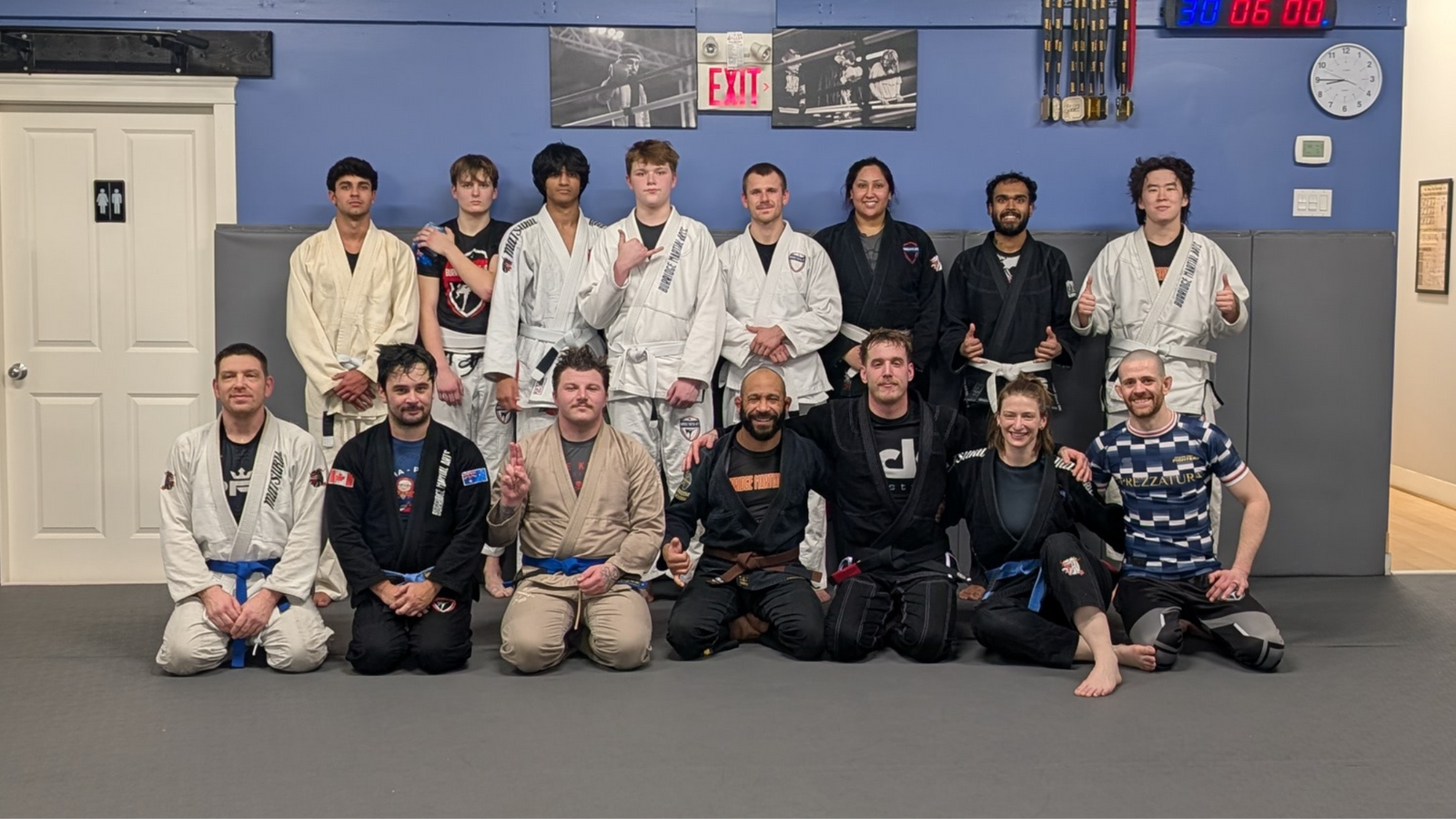
Starting Brazilian Jiu-Jitsu can feel intimidating when you have never trained before.
You may wonder whether everyone else will already know what they are doing, whether you need to be in excellent shape or whether you will be expected to wrestle immediately.
At Burridge Martial Arts in Abbotsford, our Adult Brazilian Jiu-Jitsu classes are open to complete beginners. You do not need previous martial arts experience, specialized equipment or a certain fitness level before attending.
Here is what to expect from your first BJJ class.
What Is Brazilian Jiu-Jitsu?
Brazilian Jiu-Jitsu, commonly shortened to BJJ, is a grappling-based martial art.
Instead of focusing primarily on punches and kicks, students learn how to use movement, positioning, timing and leverage while working with a partner.
Training includes skills such as:
- Maintaining balance and posture
- Escaping from difficult positions
- Controlling positions safely
- Using leverage rather than relying only on strength
- Applying and defending submissions
- Staying calm while solving physical problems
- Communicating clearly with training partners
BJJ is sometimes described as physical problem-solving because students must recognize positions and make decisions while their partner provides resistance.
Beginners learn these skills progressively. You are not expected to understand every position or technique when you begin.
Do I Need Experience?
No previous martial arts, wrestling or grappling experience is required.
Many people attending their first BJJ class have never participated in a combat sport before. Coaches will explain the terminology, positions and movements as they are introduced.
You are not expected to memorize everything immediately.
Your first goal is simply to become familiar with the class, listen to the instruction and practise the movements at a manageable pace.
What Should I Wear?
For your first class, comfortable athletic clothing is appropriate.
Good options include:
- A fitted T-shirt or athletic shirt
- Athletic shorts without metal pieces or exposed zippers
- Leggings or compression pants
- A supportive sports bra, when applicable
Avoid loose clothing that could catch on fingers or feet. Clothing containing exposed metal, sharp fasteners or anything that could scratch a training partner should also be avoided.
Brazilian Jiu-Jitsu is practised barefoot on padded mats.
Remove watches, necklaces, earrings and other jewellery before training.
You do not need to purchase a uniform before attending your trial. If you decide to continue, our coaches can explain the clothing and equipment used for Gi and No-Gi classes.
What Should I Bring?
Bring:
- A water bottle
- Comfortable athletic clothing
- Sandals or footwear to wear when walking off the mats
- Any personal items you normally need while exercising
Try to arrive approximately 10–15 minutes early.
This gives you enough time to find the gym, meet the coach, ask questions and become familiar with the training area without feeling rushed.
Burridge Martial Arts is located at 2631 Gladys Avenue in Abbotsford, on the corner of Gladys Avenue and George Ferguson Way.
What Is the Difference Between Gi and No-Gi BJJ?
Burridge Martial Arts offers both Gi and No-Gi Brazilian Jiu-Jitsu classes.
Gi BJJ
The gi is the traditional uniform worn in Brazilian Jiu-Jitsu.
It consists of a durable jacket and pants. Students can use the material of the gi to establish grips, control positions and apply certain techniques.
No-Gi BJJ
No-Gi training is practised in athletic clothing or grappling apparel rather than the traditional uniform.
Because students cannot rely on gripping the jacket or pants, No-Gi training often places additional emphasis on body positioning, movement and controlling the opponent directly.
Both formats teach the same essential goals:
- Escaping bad positions
- Controlling strong positions
- Moving efficiently
- Applying submissions safely
- Defending against submissions
- Training calmly with resistance
Beginners can start with either format. Check the schedule before attending so you know whether the class is Gi or No-Gi.
What Happens During Class?
Every class may be slightly different, but most Adult BJJ classes include several main sections.
Warm-Up and Movement
The class may begin with movements that prepare the body for grappling.
These can include:
- Hip escapes
- Technical stand-ups
- Breakfalls
- Bridging movements
- Shoulder rolls
- Partner movement drills
- Light mobility exercises
Some of these movements may feel unfamiliar at first. The coach will demonstrate them, and you can work at a comfortable pace.
Technical Instruction
The coach will introduce a position, movement or technique.
For example, the lesson may cover:
- Escaping from mount
- Controlling side control
- Passing the guard
- Maintaining posture
- Completing a sweep
- Defending a submission
- Applying a submission safely
The technique is demonstrated and broken into manageable steps.
Do not worry if you cannot remember every detail. Learning BJJ requires repetition, and everyone needs time to become familiar with the movements.
Partner Drilling
After the demonstration, you will practise the technique with a partner.
Your partner will usually provide enough cooperation for you to learn the movement correctly before adding greater resistance.
You will alternate roles so both people have an opportunity to practise.
Drilling is not a competition. The goal is to understand the technique and help your partner learn safely.
Positional Training
Some classes include rounds that begin from a specific position.
For example, one student may begin in guard while the other works to pass. The round ends when one person completes the assigned goal, and the students restart from the original position.
This allows you to practise the lesson with controlled resistance without needing to manage every possible part of BJJ at once.
Live Training or Rolling
BJJ sparring is commonly called rolling.
During a roll, both students use the techniques they have learned while providing live resistance.
New students are not expected to know what to do immediately, and you will not be forced to roll before you are comfortable.
Live training can be introduced gradually through supervised positional rounds and carefully selected partners.
Will I Have to Spar During My First Class?
No. You will not be forced to participate in live training.
Some beginners prefer to observe the rolling portion during their first class. Others may participate in a controlled positional round with an experienced partner.
The coach can help determine the most appropriate option based on the class, your comfort level and your previous experience.
There is no benefit to rushing.
Your first classes should focus on understanding basic positions, learning safe movement and becoming comfortable working with a partner.
What Does Tapping Mean?
Tapping is one of the most important safety practices in Brazilian Jiu-Jitsu.
When a submission is applied or you feel uncomfortable, you can tap your partner with your hand. You may also tap the mat or clearly say “tap.”
Your partner must release the technique immediately.
Tapping is not embarrassing, and it does not mean you have failed. Everyone taps during training, including experienced students and coaches.
It allows students to practise submissions while protecting one another from unnecessary injury.
Beginners are encouraged to tap early rather than waiting until a position becomes painful.
How Are Training Partners Selected?
BJJ students vary in:
- Size
- Strength
- Age
- Experience
- Athletic ability
- Training goals
Coaches consider these differences when helping students find appropriate partners.
A beginner may be paired with an experienced student who understands how to train calmly and explain the drill.
A good partner does not try to dominate every round. They maintain control, communicate and adjust their pace so both students can learn.
Tell the coach if you are nervous about partner work or have any concerns before class begins.
Do I Need to Be Fit Before Starting?
No.
BJJ can be physically challenging, but you do not need to become fit before attending.
You can adjust your pace, take breaks and gradually build conditioning as you become familiar with the movements.
Beginners often feel tired because they are learning how to move in an unfamiliar way. They may also use more strength than necessary while trying to understand a position.
As your technique, breathing and efficiency improve, you will become more comfortable.
Am I Too Old to Start BJJ?
Adults begin Brazilian Jiu-Jitsu at many different ages.
You do not need to have started as a child or have an athletic background.
Training can be adjusted according to your current ability, experience and goals. Some people train for competition, while others train for fitness, recreation, confidence or the enjoyment of learning a technical martial art.
The most important considerations are consistency, communication and choosing an appropriate training pace.
What if I Have an Existing Injury?
Tell the coach before class if you have an injury, limited mobility or another physical concern that may affect your training.
Certain movements can often be modified, but the coach needs to know what you are managing.
You should also tell your training partner when there is a particular area they need to avoid.
When you are uncertain about whether training is appropriate for an injury or medical condition, speak with a qualified healthcare professional before participating.
Will I Feel Sore Afterwards?
It is normal to feel some general muscular soreness after trying a new physical activity.
BJJ uses the legs, hips, core, back, shoulders and grip in ways that may be unfamiliar.
You can make the adjustment easier by:
- Working at a reasonable pace
- Drinking water
- Taking breaks when needed
- Avoiding unnecessary tension
- Getting adequate rest
- Allowing time between your first few sessions
Sharp pain, joint pain or symptoms that feel more serious than ordinary exercise soreness should not be ignored.
What Are the Basic Etiquette Rules?
You do not need to know every gym rule before arriving. The coach will help you.
Several basic habits are especially important:
- Keep your fingernails and toenails trimmed
- Wear clean training clothing
- Remove jewellery
- Wear footwear whenever you leave the mat area
- Do not walk on the mats in outdoor shoes
- Listen while techniques are being demonstrated
- Tell your partner when something feels wrong
- Stop immediately when someone taps
- Train with control
- Stay home when you are sick
Good hygiene and respectful partner behaviour help protect everyone in the class.
How Often Should Beginners Train?
Many beginners start with two classes per week.
This provides regular repetition while allowing time for recovery between sessions.
Training once per week is still worthwhile when that is what your schedule allows. Other students may eventually train three or more times per week.
Consistency matters more than trying to attend as many classes as possible immediately.
Choose a schedule that you can maintain and gradually increase your training frequency when appropriate.
What Should I Expect Emotionally?
Feeling nervous before your first class is normal.
You are entering an unfamiliar environment, learning new movements and working closely with people you have not met before.
You may also feel confused during parts of the lesson. That does not mean you are doing badly.
Every experienced BJJ student was once a beginner who did not understand the positions or terminology.
Focus on one class at a time. Ask questions, be patient with yourself and allow the movements to become familiar through repetition.
Try Brazilian Jiu-Jitsu in Abbotsford
Burridge Martial Arts offers beginner-friendly Adult Brazilian Jiu-Jitsu classes for students ages 17 and older in Abbotsford, BC.
Our classes include structured technical instruction, partner drilling and controlled live training in a supportive environment.
You do not need previous experience or specialized equipment to begin.
Start with our one-week free trial, meet the coaches and experience a class before deciding whether BJJ is right for you.