 Burridge Martial Arts and Fitness
Muay Thai or BJJ for Teens? How to Choose the Right Martial Art
If your teenager is interested in martial arts, one of the first decisions may be whether to try Muay Thai or Brazilian Jiu-Jitsu.
Both are practical martial arts, both provide challenging physical training, and both can be started with no previous experience. But the actual experience of training them is very different.
Muay Thai is primarily a striking martial art. Brazilian Jiu-Jitsu, commonly called BJJ, is a grappling martial art based around positions, control, escapes and submissions.
For a teenager choosing between the two, there isn't one option that is automatically better.
The right choice usually comes down to what kind of training they enjoy, what they want to learn and which environment makes them want to keep coming back.
Here are some of the main differences to consider.
What Is Teen Muay Thai?
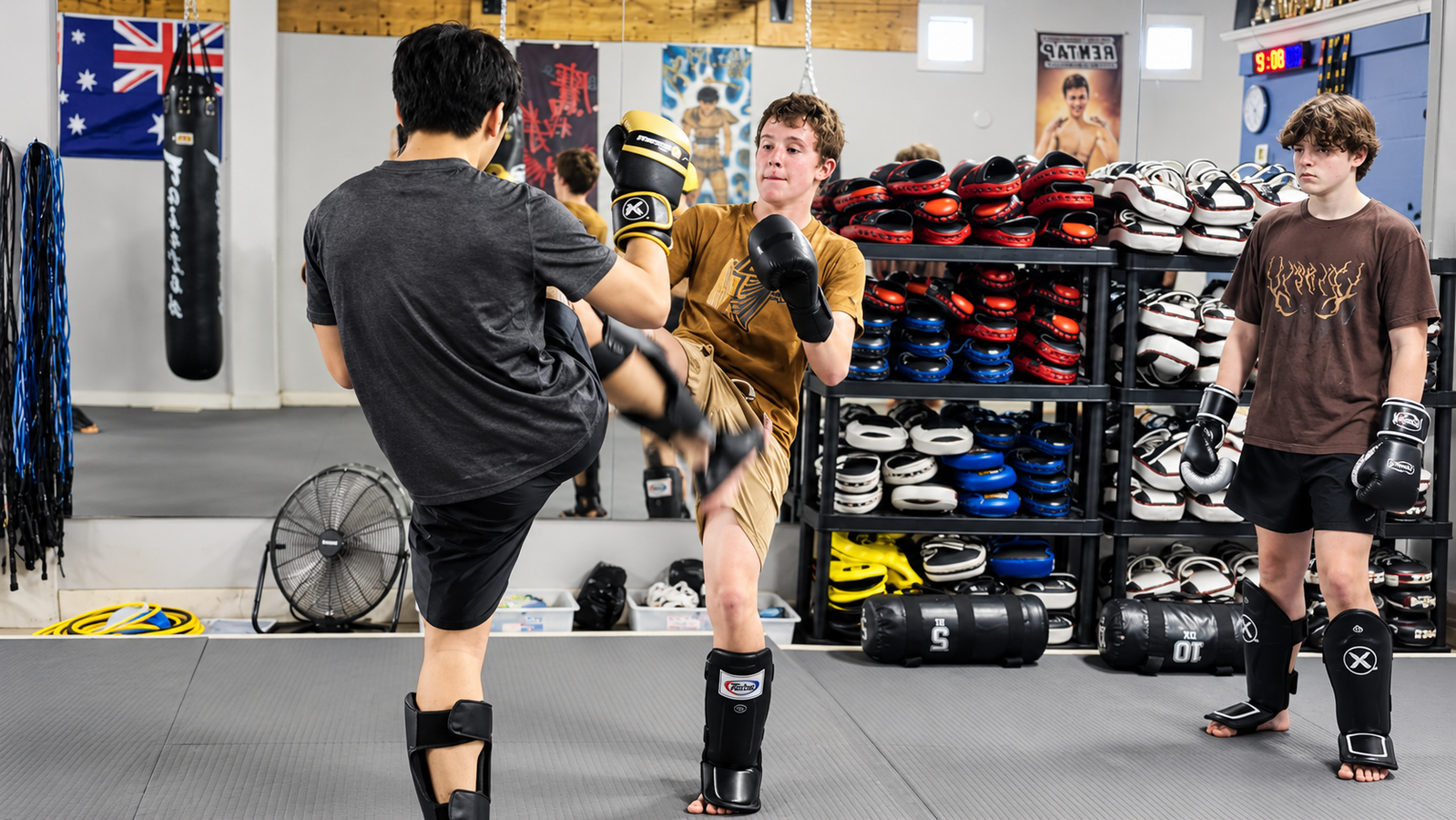
Muay Thai is a striking martial art that uses punches, kicks, knees and elbows along with footwork, defence and clinch skills.
At Burridge Martial Arts, our Teen Muay Thai program is specifically for ages 13–16 and is open to complete beginners as well as students with previous experience.
Classes include areas such as:
- Punching and kicking technique
- Knees and elbows
- Footwork and defensive movement
- Padwork
- Partner drills
- Conditioning
- Controlled sparring as students progress
Training is coach-led and structured. Students gradually learn how to move correctly, use techniques with control and stay composed while working with a partner.
Sparring is part of the teen program, but it is introduced progressively. Coaches supervise closely, match partners appropriately and manage the intensity based on experience and maturity.
A teenager does not need previous kickboxing experience before starting.
What Is Teen Brazilian Jiu-Jitsu?
Brazilian Jiu-Jitsu is a grappling-based martial art.
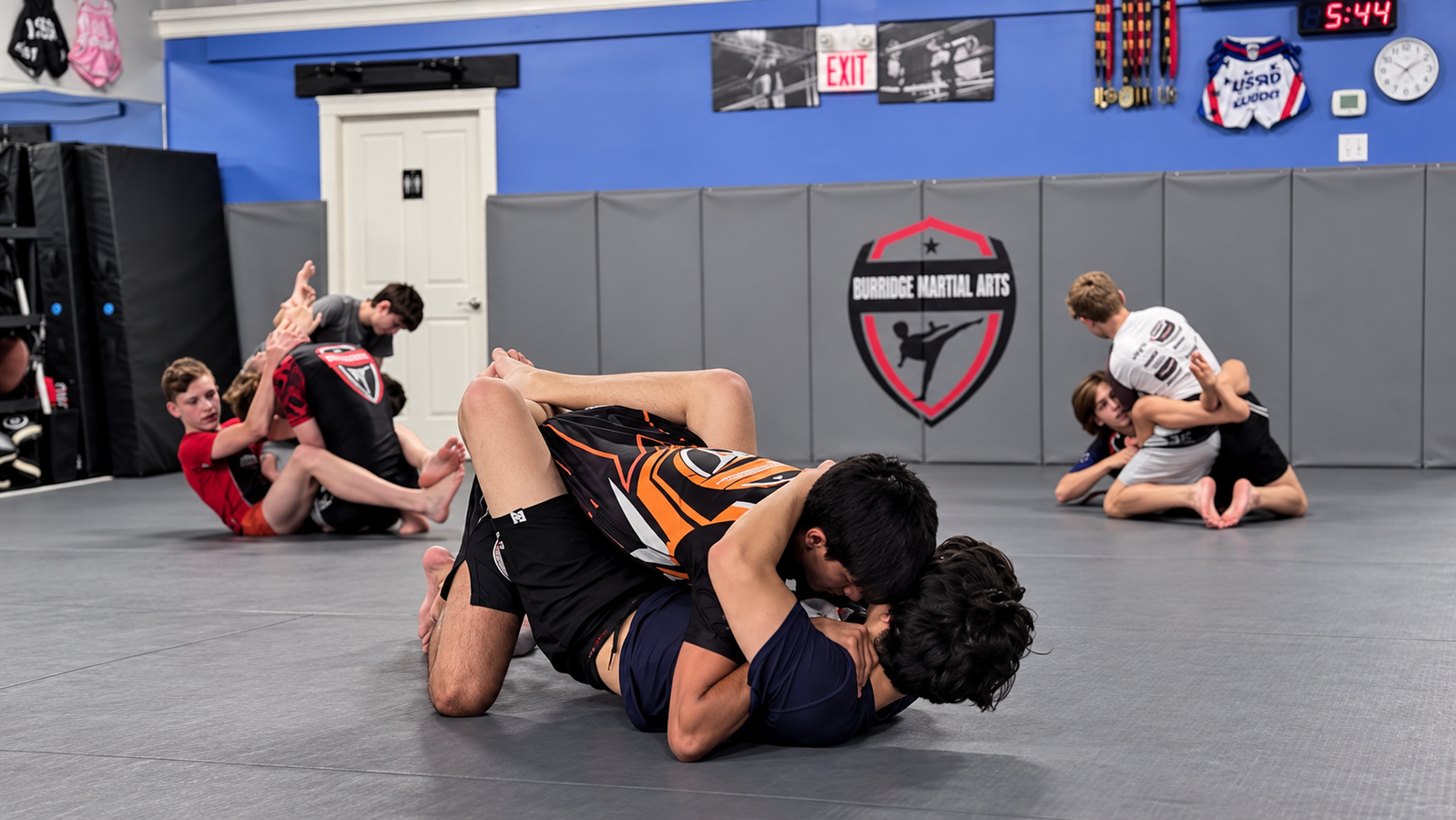
Rather than exchanging punches and kicks, students learn how to control positions, escape from difficult situations and use leverage and technique against another person.
Teen BJJ training includes skills such as:
- Fundamental grappling positions
- Escapes
- Positional control
- Takedown and movement fundamentals
- Submissions
- Partner drilling
- Controlled live training
BJJ has a strong problem-solving element.
A student may understand a technique when practising it slowly, then need to adapt that technique when a partner begins resisting and moving differently.
Our Teen BJJ program is also designed specifically for ages 13–16. Teenagers train with others in their own age group rather than being placed directly into an adult class.
Beginners are welcome and techniques are introduced step by step.
The Biggest Difference: Striking vs Grappling
The simplest way to compare Muay Thai and BJJ is to look at what happens when you train.
In Muay Thai, most of the training takes place standing.
Students learn how to move, strike pads and bags, defend techniques and eventually work with a partner in controlled sparring.
In BJJ, much of the training involves close physical contact and grappling.
Students practise controlling positions, escaping, maintaining balance and working against a partner who may be trying to achieve the opposite goal.
Some teenagers have an immediate preference.
A teen who loves hitting pads, learning combinations and moving around on their feet may naturally enjoy Muay Thai.
Someone who likes wrestling, strategy and solving physical problems may prefer BJJ.
Neither preference says anything about which student is more athletic or better suited to martial arts. They are simply different activities.
Which Is Better for a Teen Who Has Never Trained Before?
Both can be excellent starting points.
A teenager does not need to complete a children's program before joining either teen class at Burridge Martial Arts.
Our Teen Muay Thai and Teen BJJ programs both accept complete beginners.
New students are taught the basic movements and terminology gradually rather than being expected to keep up with experienced students immediately.
This is especially important for teenagers.
Walking into a martial arts gym for the first time can feel intimidating, particularly if they are worried that everyone else will already know what they are doing.
In reality, almost every experienced student in the room was once the new person who did not know how to stand, move or perform the techniques.
Being new is expected.
What If My Teen Isn't Very Athletic?
They do not need to be.
It is common for parents to think their teenager needs to improve their fitness before starting martial arts.
That reverses the process.
Martial arts training itself is one way to gradually improve fitness, coordination and body awareness.
A new student may find the first few classes tiring because they are using unfamiliar movements. That is normal.
Muay Thai places a lot of demand on cardiovascular fitness through padwork, movement and combinations.
BJJ is physically demanding in a different way. Grappling involves controlling another person's weight, changing positions and maintaining technique while tired.
Both develop fitness through regular training.
The better question is usually not which martial art requires more fitness. It is which type of training the teenager enjoys enough to practise consistently.
Which Is Better for Confidence?
Parents often ask about martial arts because they would like their teenager to become more confident.
Both Muay Thai and BJJ can give students opportunities to become more comfortable doing difficult things.
But confidence generally does not come from a coach simply telling students to be confident.
It tends to develop through experience.
A teenager learns a technique that initially feels awkward. They practise it. Eventually they perform it correctly.
They may feel nervous about training with a new partner and then discover they can handle it.
They may find a class difficult and still finish it.
Over time, those small experiences give students evidence that they are capable of learning and improving.
The exact activity matters less than having a structured environment where progress is earned gradually.
Which Is Better for a Shy Teenager?
Either one can work.
It is easy to assume that a shy teenager should automatically choose BJJ or that an outgoing teenager should choose Muay Thai, but personality does not always predict what someone will enjoy.
A quiet student may love hitting pads and learning striking combinations.
An outgoing student may become completely absorbed in the technical problem-solving of BJJ.
The training environment matters more.
Teenagers often feel more comfortable when they are training with people close to their own age. Burridge Martial Arts has dedicated Teen Muay Thai and Teen BJJ classes for ages 13–16 rather than requiring teenagers to begin in general adult classes.
That can make the first experience much less intimidating.
What About Sparring?
Both martial arts eventually include training against a resisting partner.
They simply do it differently.
Sparring in Muay Thai
Muay Thai sparring involves controlled striking with another student.
It is not supposed to be a fight.
Students learn timing, distance, defence and control while applying the techniques they have practised through drills and padwork.
At Burridge Martial Arts, teen sparring is introduced progressively and closely supervised. Partners are matched carefully and the intensity is kept appropriate for their experience and maturity.
Sparring in BJJ
In BJJ, live training is commonly called rolling.
Students attempt to control positions, escape and apply techniques while their partner is also actively resisting.
There are no punches or kicks involved.
Teen BJJ includes controlled live training, introduced gradually at a level suitable for the student's experience.
For some teenagers, this is one of the most enjoyable parts of BJJ because each round becomes a constantly changing technical problem.
Which Is Better for Self-Defence?
Both teach useful skills.
Muay Thai teaches students how to move, strike, defend themselves while standing and stay composed when another person is applying pressure.
BJJ teaches students how to control another person, escape difficult positions and respond when physical contact becomes close-range grappling.
But self-defence should not be the only consideration when choosing a teenage martial arts program.
Your teenager will spend hundreds of hours practising these skills in a gym environment.
Finding a class with appropriate coaching, controlled training and a culture they enjoy is far more important than debating hypothetical situations.
The martial art they practise consistently will generally be more useful than the supposedly perfect martial art that they stop attending after a month.
Can Teens Train Both Muay Thai and BJJ?
Absolutely.
The two martial arts complement each other because they focus on different areas.
At Burridge Martial Arts, teenagers can train in Muay Thai, BJJ or both. The live pricing page currently includes separate Teen Muay Thai and Teen BJJ memberships as well as a combined Teen Muay Thai and BJJ option.
There is no requirement for a new student to start both immediately.
Some teenagers prefer to choose one program first, become comfortable in the gym and add the other later.
Others enjoy the variety of doing both from the beginning.
The best approach depends on their interest, schedule and how much training they realistically want to do each week.
How Often Should a Beginner Teen Train?
Consistency matters more than trying to train every possible class immediately.
The Teen Muay Thai program recommends that many beginners start around one or two classes per week before increasing their training as confidence and interest grow.
That is a reasonable approach to martial arts generally.
A teenager also has school, homework, other sports, family commitments and recovery to manage.
A schedule they can maintain for months is much better than an ambitious schedule they can only maintain for two weeks.
If they become more interested, there will always be opportunities to train more.
Should a 16-Year-Old Join Teens or Adults?
Sixteen can be a transition year.
The Burridge Martial Arts program page notes that a 16-year-old may fit best in either the Teen or Adult program depending on their experience and comfort level.
There is no need to rush the move.
A newer or less confident sixteen-year-old may be more comfortable continuing in the teen program, while another student with significant experience may be ready for adult training.
The coaches can help make that decision based on the individual student rather than age alone.
How Should You Choose?
If your teenager already has a strong preference, start there.
If they are unsure, think about the type of activity that sounds more appealing.
Muay Thai may appeal more if they like:
- Striking and kicking
- Padwork
- Fast-paced movement
- Learning combinations
- Standing partner drills
BJJ may appeal more if they like:
- Grappling or wrestling
- Problem-solving
- Close partner training
- Learning positions and escapes
- Technical strategy
But don't overthink the decision.
The most reliable way to find out is to try a class.
Someone can watch dozens of martial arts videos and still have no idea which style feels better to them until they actually participate.
Teen Martial Arts Classes in Abbotsford
Burridge Martial Arts offers dedicated Muay Thai and Brazilian Jiu-Jitsu programs for teenagers ages 13–16 in Abbotsford.
Both programs welcome complete beginners, and teens do not need previous martial arts experience before attending.
If your teenager already knows which one they want to try, start there.
If they are undecided, that is completely normal. They can try a class, meet the coaches and experience the gym before choosing.
Our one-week free trial currently provides access to Teen Muay Thai and Teen Brazilian Jiu-Jitsu, so there is no need to make a long-term decision before they have actually trained.
The goal is simply to find the program they enjoy enough to keep learning.