 Burridge Martial Arts and Fitness
Is Brazilian Jiu-Jitsu Safe for Kids? A Parent’s Guide
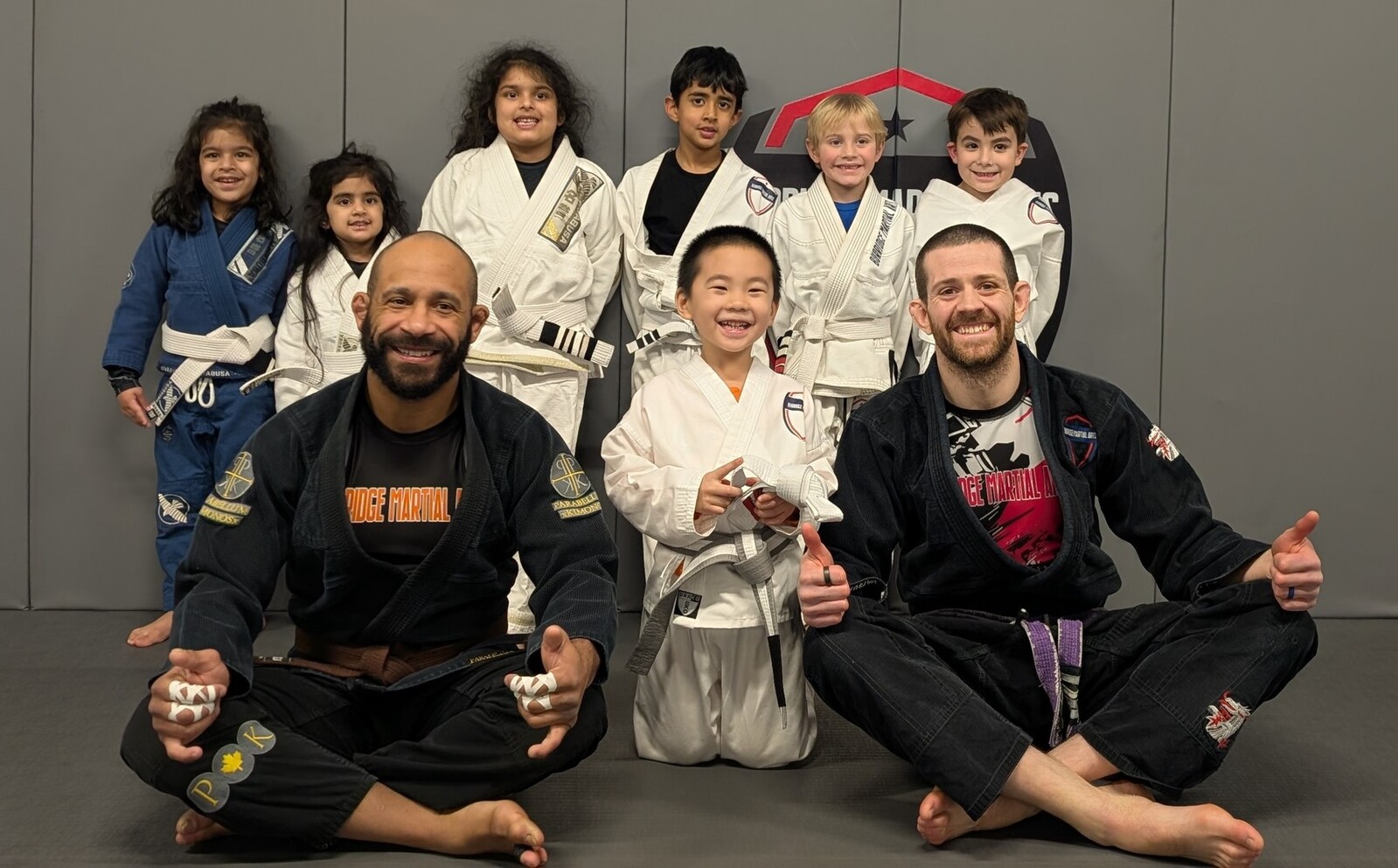
Starting a martial art can be exciting for a child, but it is natural for parents to have questions about safety.
Brazilian Jiu-Jitsu involves close-contact partner training, takedowns, positional control and eventually controlled sparring. From the outside, it can sometimes look intense.
So, is Brazilian Jiu-Jitsu safe for kids?
Like any physical activity, BJJ is not completely risk-free. Bumps, bruises and minor injuries can happen. However, a properly structured children’s program manages risk through close supervision, age-appropriate instruction, controlled training and clear expectations for every student.
At Burridge Martial Arts in Abbotsford, safety, control and respectful partner training are central parts of our Kids BJJ program.
What Is Brazilian Jiu-Jitsu?
Brazilian Jiu-Jitsu, often shortened to BJJ, is a grappling-based martial art.
Rather than relying primarily on punches or kicks, students learn how to use balance, movement, positioning and leverage. Children practise skills such as:
- Falling safely
- Escaping from common positions
- Maintaining balance and control
- Moving safely with a partner
- Staying calm while solving physical problems
- Recognizing when to stop or release a technique
Kids learn these skills progressively rather than being expected to perform everything immediately.
How Is Safety Managed in a Kids BJJ Class?
A well-run children’s BJJ program should never simply place two inexperienced children together and tell them to wrestle.
Classes should follow a clear structure, with coaches demonstrating techniques, explaining the safety rules and supervising students while they practise.
Age-Appropriate Techniques
Children should only be taught techniques that are suitable for their age, experience and level of control.
New students begin with foundational skills such as movement, balance, safe falling, positional awareness and basic escapes. More advanced techniques are introduced gradually as students demonstrate maturity and safe training habits.
Close Supervision
Coaches should remain actively involved throughout the class.
They help children understand the drills, correct unsafe movement and make sure students are training at an appropriate pace. Supervision is especially important when children begin practising live resistance.
Careful Partner Matching
Children vary considerably in size, strength, confidence and experience.
Coaches should consider those differences when selecting training partners. The goal is not always to match children who are exactly the same size, but every pairing should be appropriate, controlled and useful for both students.
Learning to Tap
One of the first safety concepts in BJJ is tapping.
A tap is a clear signal that tells a partner to stop immediately. Children learn that tapping is not losing or failing. It is a normal and responsible part of training.
They also learn that when a partner taps, the technique must be released right away.
This teaches children to communicate clearly, respect boundaries and take responsibility for their training partner’s safety.
Gradual Introduction to Live Training
Children do not need to begin with unrestricted sparring.
New students can first practise movement drills, specific positions and controlled partner exercises. Live training can then be introduced gradually as the child becomes more comfortable and demonstrates an understanding of the rules.
At Burridge Martial Arts, partner work and rolling are coached and introduced at an appropriate pace.
Will My Child Get Hurt?
No sport can guarantee that a child will never be hurt.
Children may occasionally experience minor bumps, soreness or bruising, just as they might in soccer, hockey, gymnastics or playground activities.
The important question is whether the program takes reasonable steps to manage those risks.
Parents should look for:
- Coaches who actively supervise the class
- Clear safety rules
- Age-appropriate techniques
- Controlled training intensity
- Thoughtful partner matching
- Clean training spaces
- A culture where tapping and stopping are respected
- Coaches who communicate openly with parents
A responsible gym should be willing to explain how classes are structured and how safety concerns are handled.
Does BJJ Encourage Children to Fight?
Brazilian Jiu-Jitsu should not teach children to become aggressive.
A good program emphasizes control, patience, respect and making responsible choices. Children learn that knowing a martial art does not give them permission to use it unnecessarily.
BJJ can also teach children that physical situations have consequences. They experience resistance in a controlled environment and learn that staying calm is often more effective than panicking or acting aggressively.
The goal is not to create children who want to fight. The goal is to help them become more confident, capable and responsible.
Is BJJ Suitable for Shy or Nervous Children?
Many children feel nervous before their first class.
They may be unsure about entering a new environment, training with a partner or trying movements they have never done before.
A child should not be expected to feel completely comfortable immediately.
Coaches can help by:
- Keeping the first drills simple
- Explaining what will happen
- Pairing the child with a supportive partner
- Allowing them time to observe
- Encouraging participation without unnecessary pressure
Confidence usually develops through repeated positive experiences. A nervous first day does not mean that BJJ is a poor fit.
What if My Child Has Trouble Focusing?
BJJ classes require children to listen, watch demonstrations, remember instructions and work cooperatively with a partner.
Those skills may be difficult for some children at first.
A structured class gives children regular opportunities to practise following directions and returning their attention to a task. Progress may be gradual, and children will not all develop at the same pace.
Parents and coaches should communicate honestly about how the child is adjusting and whether the class placement is appropriate.
Tiny Tots BJJ or Kids BJJ?
Burridge Martial Arts offers different BJJ programs based on age and readiness:
Tiny Tots BJJ: Ages 4–6
Tiny Tots provides a playful and structured introduction to movement, balance, coordination, listening and partner training.
A parent or guardian must remain at the gym throughout the class. Because Tiny Tots is often full or waitlisted, families should contact us before arranging a trial.
Kids BJJ: Ages 6–12
Kids BJJ introduces more technical Brazilian Jiu-Jitsu, including positional control, escapes, basic submissions and controlled live training.
Age six is intentionally included in both programs because it is a transition year.
Some six-year-olds are ready for the longer and more technical Kids BJJ class. Others benefit from remaining in Tiny Tots while they continue developing their focus, confidence and comfort working with partners.
Placement depends on the individual child rather than age alone.
What Should Parents Expect During the First Class?
For a first Kids BJJ class, children can wear comfortable athletic clothing such as a T-shirt with shorts or leggings.
They should also bring a water bottle.
A gi is not required for the trial class. If your child continues training, the coaches can explain what uniform and equipment will be needed.
Arriving approximately 10 to 15 minutes early gives your child time to:
- Meet the coach
- Become familiar with the gym
- Ask questions
- Watch part of another class when possible
- Get settled without feeling rushed
Parents are welcome to watch Kids BJJ from the designated viewing area.
Kids Brazilian Jiu-Jitsu in Abbotsford
Burridge Martial Arts offers structured Brazilian Jiu-Jitsu classes for children in Abbotsford, BC.
Our goal is to help children develop real martial arts skills while learning how to train safely, respectfully and confidently with others.
Children ages 6–12 can begin with a free trial. Families interested in Tiny Tots BJJ for ages 4–6 should contact us first so we can confirm availability and help determine the most appropriate class.