 Burridge Martial Arts and Fitness
Muay Thai or BJJ for Adults? How to Choose
If you have decided to try martial arts but are stuck choosing between Muay Thai and Brazilian Jiu-Jitsu, you are not alone.
Both provide challenging workouts, practical skills and something to continually improve at, but the experience of training them is very different.
Muay Thai is primarily a striking martial art. You spend most of your training standing while learning punches, kicks, knees, elbows, defence and footwork.
Brazilian Jiu-Jitsu, usually shortened to BJJ, is a grappling martial art. Instead of striking, you learn how to control positions, escape, apply submissions and solve problems while working closely with a training partner.
There is no universally better choice.
The right starting point depends much more on what kind of training you actually enjoy.
What Is Adult Muay Thai Training Like?
Muay Thai training is predominantly done on your feet.
A typical class can involve technical instruction, padwork, partner drills and conditioning. You gradually learn how to move efficiently while combining offensive and defensive techniques.
At Burridge Martial Arts, Adult Muay Thai covers punching, kicking, knees, elbows, footwork, defence and conditioning.
You do not need any previous martial arts experience before joining.
One of the immediate appeals of Muay Thai is padwork. Even as a beginner, there is something satisfying about learning a combination and gradually making it smoother, faster and more technically correct.
It can also be a demanding workout without feeling like you are simply exercising for an hour.
You are concentrating on a skill, and the fitness develops alongside it.
What Is Adult BJJ Training Like?
Brazilian Jiu-Jitsu feels completely different.
Most of the training takes place through close-contact grappling, with students learning positions such as guard, side control, mount and back control.
You learn how to escape difficult positions, control another person and eventually apply submissions using leverage and technique.
Classes generally involve learning a technique, practising it with a partner and then progressing into controlled positional or live training.
BJJ can feel almost like physical problem-solving.
Your training partner is constantly changing position and reacting to what you do, so eventually you have to recognize problems and find solutions while you are moving.
That is a major part of what keeps many people interested in it for years.
The Biggest Difference: Striking or Grappling
This is usually the easiest place to start.
Ask yourself which sounds more interesting:
Learning to punch, kick, defend and move effectively while standing?
Or:
Learning how to grapple, control positions, escape and submit an opponent?
If one immediately sounds more appealing, that is probably the one you should try first.
Muay Thai involves striking. BJJ involves significantly more close physical contact.
Some people love hitting pads but have little interest in wrestling on the ground.
Others dislike the idea of being punched or kicked but immediately enjoy the strategy and physical problem-solving of grappling.
Neither reaction is wrong.
Which Is Better for Fitness?
Both can get you into very good shape, but they challenge your body differently.
Muay Thai training involves repeated striking, footwork, padwork and conditioning. It can place a strong demand on cardiovascular fitness and muscular endurance.
BJJ also becomes extremely physically demanding once you begin grappling against resistance. You are moving your own body while simultaneously controlling, escaping or reacting to another person.
Beginners often discover muscles they did not realize they were using.
The important point is that you do not need to get fit before starting either one.
Waiting until you are “in shape enough for martial arts” usually just delays beginning.
Start at a manageable pace and allow your conditioning to improve through training.
What if I Am Nervous About Sparring?
This is one of the most common concerns for new adults.
Joining Muay Thai does not mean you will walk into your first class and be expected to fight someone.
Beginners first need to develop fundamental technique, control and an understanding of safe partner training. At Burridge Martial Arts, Muay Thai sparring is introduced progressively and is controlled.
BJJ does involve live partner training as students progress, but that does not mean a beginner is simply thrown into a competitive match.
Students first learn positions, techniques, communication and how to tap before live training becomes a meaningful part of their development.
You are learning to train with people, not trying to prove that you can beat them.
Is BJJ Harder on the Body Than Muay Thai?
There is no simple answer.
They create different stresses.
Muay Thai involves repetitive striking movements, kicking, impact against pads and bags and, for students who choose to progress into sparring, controlled contact with training partners.
BJJ involves twisting, pressure, gripping, close physical contact and working from unusual positions.
Both are physical sports, and neither is risk-free.
If you have an existing injury or limitation, tell your coach before training. You can often modify exercises or work at a different pace, but significant medical concerns should be discussed with an appropriate healthcare professional.
Choosing between the two solely because you assume one is automatically “safe” and the other is not usually oversimplifies the decision.
Which Is Better for Self-Defence?
They teach different ranges of physical confrontation.
Muay Thai develops striking, defence, distance management, balance and the ability to remain composed while someone is attacking from a standing position.
BJJ develops control at close range and teaches you how to move, escape and make decisions when grappling with another person.
That is also one reason some adults eventually decide to train both.
Striking and grappling address different problems.
Of course, physical technique is only one aspect of self-defence. Avoidance, awareness and de-escalation should always come before fighting whenever possible.
Which Is Easier for a Complete Beginner?
Neither requires previous experience.
Both have an initial learning curve.
In Muay Thai, coordinating your stance, hands, feet and defence can feel awkward at first. Something as simple as throwing a punch while maintaining your balance may require more thought than you expect.
BJJ introduces unfamiliar positions, terminology and movements. During your first few classes, you may occasionally have no idea where your arms or legs are supposed to go.
That is normal.
Nobody starts martial arts already knowing martial arts.
A beginner-friendly class should give you room to learn rather than expect you to keep up with someone who has trained for years.
What if I Am Starting Martial Arts Later in Life?
You do not need to have started as a teenager.
Adults begin both Muay Thai and BJJ at many different ages and fitness levels.
The goal also does not have to be competition.
You can train because you want to improve your fitness, learn a new skill, relieve stress, meet people or simply have something challenging to work toward.
Your training can change as you become more experienced.
Someone who initially joins twice a week for exercise may eventually become interested in sparring or competition. Someone else may happily train recreationally for years.
Both are legitimate ways to participate.
Which One Is Better for Stress Relief?
This comes down to personality.
For some people, hitting pads for an hour and concentrating entirely on combinations is an excellent way to switch off after work.
For others, BJJ provides that same mental break because grappling demands their full attention. It is difficult to think about emails or tomorrow's schedule while someone is trying to pass your guard.
The common factor is that both require you to be present.
That is one of the reasons martial arts training can feel very different from going to the gym and completing a workout on your own.
How Often Should a Beginner Train?
You do not need to train every day to make progress.
For many beginners, two classes per week is a very manageable starting point. It provides enough repetition to begin remembering what you learned without making martial arts take over your entire schedule.
Once your body adjusts and you know that you enjoy training, you can always add more.
Consistency matters more than having an ambitious schedule that you cannot maintain.
Can I Train Both Muay Thai and BJJ?
Absolutely.
You do not have to choose one forever.
Training both gives you experience in striking and grappling and also adds variety to your week.
However, you also do not need to start both immediately.
If you are completely new to martial arts, there is nothing wrong with choosing the one that interests you most and spending some time becoming comfortable.
You can add the other later.
Burridge Martial Arts currently offers separate Adult Muay Thai and Adult BJJ memberships as well as a combined membership for students who want to train both.
So, Should I Choose Muay Thai or BJJ?
Start with what genuinely sounds more enjoyable.
Muay Thai may be the better starting point if you like:
- Punching and kicking
- Padwork
- Standing movement
- Fast combinations
- Striking and defence
- A workout built around learning striking skills
BJJ may be the better starting point if you like:
- Grappling
- Strategy and problem-solving
- Close-contact training
- Learning positions and escapes
- Technique built around leverage and control
- The idea of live grappling without punches or kicks
If you still cannot decide, that is actually easy to solve.
Try them.
Reading about the differences can help you understand the two martial arts, but it cannot tell you which one you will enjoy more once you are actually on the mats.
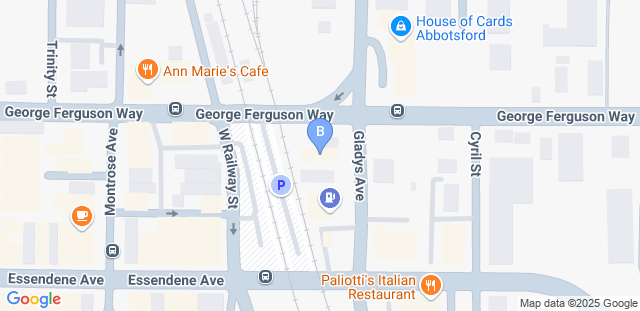
Adult Martial Arts in Abbotsford
Burridge Martial Arts offers beginner-friendly Adult Muay Thai and Adult Brazilian Jiu-Jitsu in Abbotsford, BC.
Both programs are open to complete beginners, and you do not need to purchase equipment or get into shape before trying your first class. Burridge Martial Arts and Fitness
Our one-week free trial currently includes both Adult Muay Thai and Adult BJJ, so if you are undecided, use the trial to experience the training rather than feeling like you need to make the perfect choice beforehand. Burridge Martial Arts and Fitness
Find the one you look forward to coming back to.