 Burridge Martial Arts and Fitness
Muay Thai vs Kickboxing: What's the Difference?
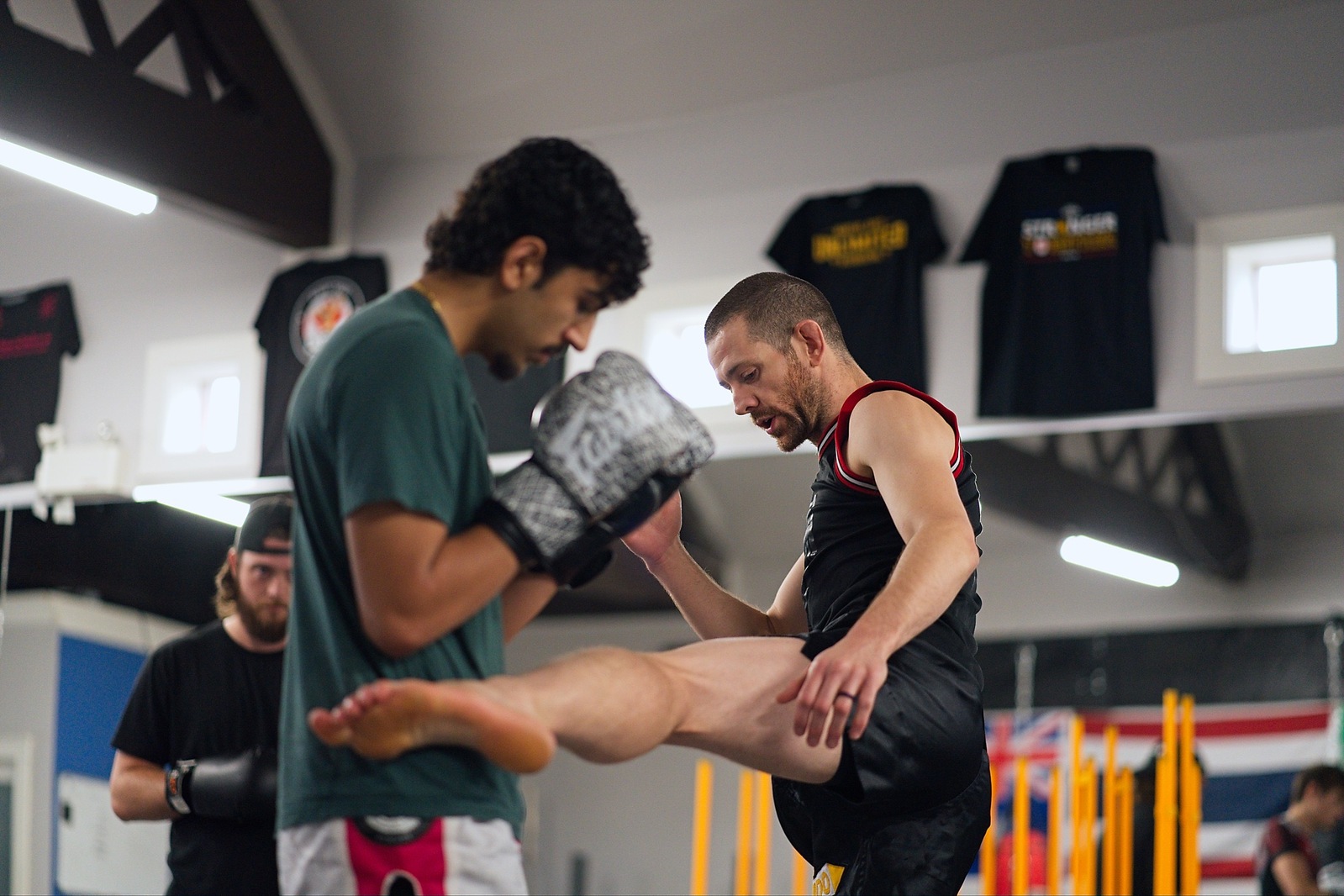
Muay Thai and kickboxing are both striking-based martial arts that use combinations of punches, kicks, movement and defensive techniques.
Because the two have many similarities, people often use the terms interchangeably. However, they are not exactly the same.
The biggest differences usually involve the techniques being taught, the competition rules and how fighters move and engage with one another.
At Burridge Martial Arts in Abbotsford, we offer Kids Kickboxing for ages 6–12 and Muay Thai programs for teens and adults. This guide explains the differences and helps families and new students choose the most appropriate class.
What Is Muay Thai?
Muay Thai is a striking martial art originating from Thailand.
It is often called the “art of eight limbs” because it uses:
- Two fists
- Two elbows
- Two knees
- Two shins or feet
Muay Thai also includes clinch work. The clinch is a standing grappling position in which students learn posture, balance, control, knees, turns and defensive skills.
Training commonly includes:
- Punching and kicking technique
- Knees and elbows
- Footwork and defence
- Padwork
- Bag work
- Controlled partner drills
- Clinch training
- Physical conditioning
Beginners do not need to learn all of these areas immediately. Skills are introduced progressively as students develop coordination, control and confidence.
What Is Kickboxing?
Kickboxing is a broader term used for several striking styles and competitive rulesets.
Most forms of kickboxing use punches and kicks. Depending on the particular style or ruleset, training may also include knees, low kicks, limited clinch work or other techniques.
Because kickboxing can refer to different systems, two kickboxing gyms may not teach exactly the same curriculum.
Some programs are primarily fitness-based. Others teach a complete combat sport with technical drills, partner training and competition opportunities.
The most useful approach is to look beyond the program name and ask what is actually taught in the class.
What Do Muay Thai and Kickboxing Have in Common?
Both can teach students how to:
- Stand and move with balance
- Punch and kick correctly
- Defend against strikes
- Use combinations
- Work with pads and training partners
- Improve coordination and fitness
- Stay calm while learning challenging skills
- Develop discipline and confidence
Both can provide an excellent workout, but a good martial arts program should teach more than exercise.
Students should also learn proper technique, control, safe partner training and steady skill development.
What Are the Main Differences?
The exact differences depend on the type of kickboxing being compared with Muay Thai, but several general distinctions are common.
Techniques
Muay Thai includes punches, kicks, knees, elbows and clinch work as part of the complete martial art.
Some forms of kickboxing emphasize punches and kicks while limiting elbows or extended clinch work. Other kickboxing rulesets may allow knees and low kicks.
This is why the word “kickboxing” alone does not always tell you exactly which techniques a school teaches.
Clinch Training
The clinch is an important part of Muay Thai.
Students learn how to control posture, maintain balance, create space, defend and safely apply knees or turning techniques.
Some kickboxing styles allow only brief clinch contact, while others do not include clinch work at all.
Stance and Movement
Muay Thai students often use a stance that allows them to check kicks, throw knees and engage in the clinch.
Other kickboxing styles may use more lateral movement, longer punching combinations or a stance influenced by Western boxing.
Neither approach is automatically better. The movement reflects the techniques and rules of the sport being practised.
Competition Rules
Muay Thai and kickboxing competitions can use different scoring systems, permitted techniques and limits on clinching.
These differences matter for competitive athletes, but they are much less important for someone attending a beginner class for fitness, confidence and skill development.
A beginner should focus first on finding knowledgeable coaches, a supportive environment and a class appropriate for their age and experience.
Why Is Your Children’s Program Called Kids Kickboxing?
At Burridge Martial Arts, our Kids Kickboxing program is an age-appropriate striking class for children ages 6–12.
Students learn fundamentals drawn from Muay Thai and kickboxing, including:
- Stance and footwork
- Punches and kicks
- Defensive movement
- Balance and coordination
- Padwork
- Controlled partner drills
- Listening and focus
- Respect and self-control
The program is structured around the developmental needs of children rather than adult competition rules.
The goal is not to rush children into fighting. It is to help them build sound movement, confidence, discipline and safe training habits.
What Happens When Students Reach Their Teen Years?
Our Teen Muay Thai program is designed for students ages 13–16.
Teen classes continue developing striking fundamentals while introducing more technical Muay Thai training appropriate to the students’ age, maturity and experience.
Students work on:
- Punching and kicking combinations
- Defence and footwork
- Knees and Muay Thai technique
- Padwork and partner drills
- Fitness and conditioning
- Confidence under pressure
Beginners can join the Teen Muay Thai program without having completed Kids Kickboxing first.
What Is Adult Muay Thai Training Like?
Adult Muay Thai is available for students ages 17 and older.
Classes are open to complete beginners as well as experienced students. Training focuses on proper technique, padwork, defence, conditioning and controlled partner drills.
Students do not need to be fighters or plan to compete.
Many adults train because they want to:
- Improve their fitness
- Learn a practical skill
- Build confidence
- Reduce stress
- Meet new people
- Challenge themselves
- Become part of a supportive team
Competition and advanced training are available for interested and approved students, but they are never required.
Which Is Better for Fitness?
Both Muay Thai and kickboxing can improve:
- Cardiovascular fitness
- Coordination
- Balance
- Strength and endurance
- Mobility
- Body awareness
The quality and consistency of the training matter more than the name of the style.
The best program is one that teaches you progressively, keeps you engaged and fits your current ability.
You do not need to become fit before beginning. Fitness develops as you train consistently.
Which Is Better for Beginners?
Both can be beginner-friendly when taught in a structured and supportive environment.
A beginner should look for a gym where:
- Coaches explain techniques clearly
- Students can work at an appropriate pace
- Safety and control are emphasized
- Sparring is introduced gradually
- Questions are encouraged
- New students are made to feel welcome
- Experienced students treat beginners respectfully
You should not be expected to know the terminology, own all the equipment or be in excellent physical condition before your first class.
Will I Have to Spar?
No. New students are not expected to spar during their first class.
Beginners start by learning stance, movement, basic techniques and safe partner drills.
Sparring is introduced gradually for students who have developed the necessary skills, control and protective equipment. Participation takes place under coach supervision.
Children’s training is also structured according to age, experience and maturity.
What Should I Bring to My First Class?
For your first class, bring:
- Comfortable athletic clothing
- A water bottle
- A willingness to learn
Training is normally done barefoot.
You do not need to purchase gloves or other specialized equipment before your trial. If you decide to continue, the coaches can explain what equipment you will need.
Try to arrive approximately 10–15 minutes early so you have time to meet the coach and become familiar with the gym.
Choosing a Striking Program in Abbotsford
The right program will mainly depend on the student’s age.
Kids Kickboxing: Ages 6–12
A structured, energetic introduction to striking fundamentals, movement, coordination, confidence and discipline.
Teen Muay Thai: Ages 13–16
Technical Muay Thai training designed specifically for teenagers of all experience levels.
Adult Muay Thai: Ages 17+
Beginner-friendly Muay Thai classes for adults interested in fitness, technical development, recreational training or competition.
No previous martial arts experience is required for any of these programs.
Try Muay Thai or Kickboxing in Abbotsford
Burridge Martial Arts offers beginner-friendly striking classes for children, teenagers and adults in Abbotsford, BC.
You do not need to know whether Muay Thai or kickboxing is right for you before visiting. Choose the program that matches your age, attend a free trial and speak with our coaches about your experience and goals.
We will help you find the most appropriate place to begin.